Uncategorized

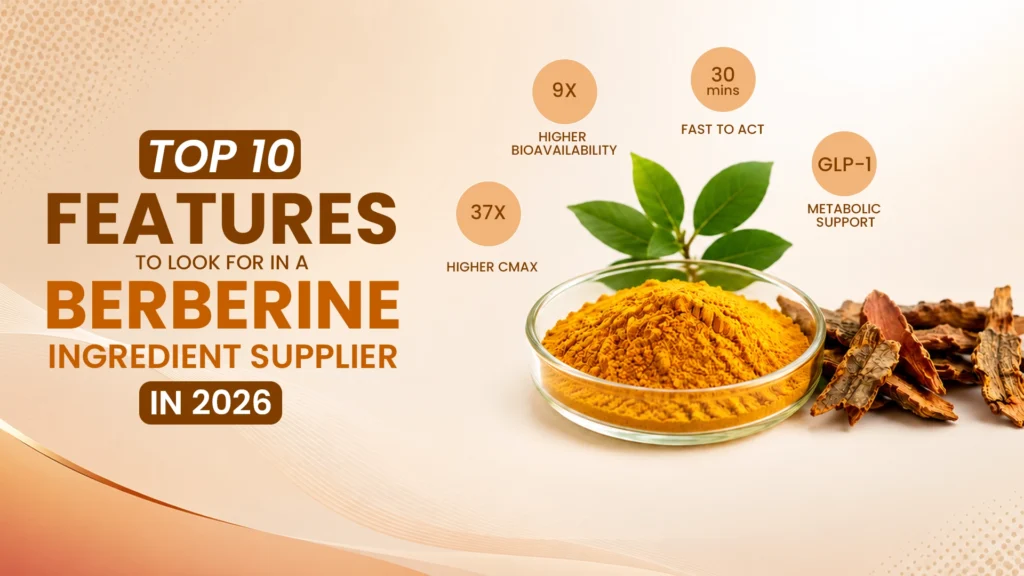
Top 10 Features to Look for in a Berberine Ingredient Supplier in 2026_zeushygia
Blog, Uncategorized

Why Sourcing the Right Berberine Supplier Matters: What Procurement Teams Need to Know in 2026

Why Sourcing the Right Berberine Ingredient Supplier Matters More Than Ever\nSourcing berberine for a new or reformulated product goes well beyond comparing price per kilogram or purity percentages. As GLP-1-adjacent and metabolic health formulations become increasingly competitive, procurement and R&D teams need a berberine supplier that can support not just raw material availability, but formulation performance, regulatory substantiation, and long-term supply reliability.\n\nThe berberine category has expanded dramatically over the past 18 months. Every major supplement brand and emerging DTC player is now evaluating berberine for metabolic health, weight management, and glucose support formulations. This rapid scaling has put real pressure on procurement teams: they’re not just sourcing an ingredient, they’re betting their product’s efficacy and brand reputation on the quality and consistency of their supplier choice.\n\nBelow are the ten criteria that matter most when evaluating a berberine manufacturer and ingredient supplier in 2026.\n 1. Ingredient Quality Standards and Traceability\nA credible berberine ingredient supplier must demonstrate documented sourcing practices across the entire supply chain, from raw botanical material through extraction and finishing. Traceability isn’t just a marketing advantage anymore; it’s table stakes for brands making claims around sustainability, organic certification, or clean-label positioning.\n\nAsk your supplier for full documentation of plant source, growing region, seasonal variation, and extraction method. Request certificates of authenticity on the botanical material itself, not just the finished extract. For brands operating in the US and EU markets, this documentation becomes critical when facing regulatory scrutiny or retailer due diligence on ingredient provenance.\n 2. Standardization, Purity, and Batch Consistency\nBerberine content must be standardized and independently verifiable through high-performance liquid chromatography (HPLC) or equivalent analytical methods. Request certificates of analysis (CoAs) for every batch your supplier produces, and confirm that their testing methodology aligns with recognized pharmacopeial standards (USP, EP, ChP).\n\nPurity alone doesn’t guarantee formulation performance, but inconsistent purity between batches absolutely guarantees formulation problems down the line. Supplement brands that experience variation in ingredient purity often discover it only after manufacturing runs, when bioavailability or efficacy differs from batch to batch. Choose a supplier whose quality control systems prevent this from happening in the first place.\n 3. Clinical Evidence and Bioavailability Data\nThe strongest berberine ingredient suppliers back their products with human clinical data, not just in vitro studies or animal models. If you’re considering a bioavailable berberine option, ask directly whether the supplier has conducted pharmacokinetic studies comparing their enhanced form to standard berberine. Is that data published, available for regulatory submission, or suitable for investor and retailer due diligence?\n\nFor a category where most competitors are still using standard, low-bioavailability berberine, access to differentiated clinical evidence is one of your most powerful competitive advantages. A supplier that can provide this data is giving you a formulation advantage that translates directly to consumer results and brand credibility.\n 4. Manufacturing Certifications and Quality Systems\nCertifications like GMP (Good Manufacturing Practice), ISO 9001, HACCP, and FSSC 22000 signal that a facility operates under consistent, auditable quality systems. For brands selling into regulated markets (US, EU, Japan, Canada), supplier certification isn’t optional—it’s often a hard requirement for retailer approval, distributor partnerships, and regulatory compliance.\n\nBeyond the logo on their website, ask to see actual third-party audit reports from the past 24 months. Request references from other brands they supply to. A supplier’s certification status is only as good as their actual adherence to those systems, which you can verify through direct communication with other customers.\n 5. Global Regulatory Compliance and Market Readiness\nA reliable nutraceutical ingredient supplier must understand regulatory status across your target markets, including US FDA guidance on dietary supplements, Novel Food authorization in the EU, KFDA requirements in Korea, and other regional frameworks. Ask directly whether the ingredient has any regulatory restrictions, pending reviews, or market-specific limitations in the regions you plan to sell into.\n\nFor berberine specifically, the regulatory landscape varies significantly by region. Some markets have stricter restrictions on botanical extracts; others have specific purity or contaminant limits. Your supplier should be able to walk you through these differences without hesitation and provide documentation of regulatory compliance for each market.\n 6. Supply Chain Reliability and Production Capacity\nBerberine demand has grown exponentially alongside the rise of GLP-1-adjacent natural formulations. Confirm your supplier has adequate production capacity to scale with your business, multiple sourcing regions if possible to mitigate geographical risk, and a documented track record of consistent lead times and on-time delivery.\n\nA bulk berberine supplier with single-source dependency or stretched production capacity carries real supply risk, especially if you’re planning to scale your product quickly. Ask about their current capacity utilization, their ability to handle 50% or 100% increases in your orders, and what their contingency plans are if primary sourcing regions face disruptions.\n 7. Comprehensive Technical Documentation and Formulation Guidance\nBeyond a basic spec sheet or certificate of analysis, look for suppliers who provide comprehensive technical dossiers. This should include: stability data under various temperature and humidity conditions, solubility profiles in different solvents, recommended dosing based on clinical evidence, compatibility with common excipients (cellulose, silica, flow agents), and guidance on formulation across different delivery formats (capsules, tablets, powders, gummies).\n\nA supplier that provides this level of technical depth is telling you they understand supplement formulation complexity and they’ve worked with enough brands to anticipate your questions. This documentation saves your R&D team time and reduces the risk of formulation surprises during manufacturing.\n 8. Custom Formulation Support and Partnership Model\nThe best berberine ingredient company partners act as an extension of your internal R&D team. They offer support for combination formulations (e.g., berberine paired with chromium, ashwagandha, or curcumin), custom dosing strategies for your specific product positioning, and pilot-batch trials before full production runs.\n\nThis level of partnership goes beyond transactional ingredient supply. It’s the difference between a vendor who ships you powder and a true ingredient partner who helps you develop a product that actually works and that you can substantiate with confidence to retailers and consumers.\n 9. Why Bioavailability Now Defines the Category\nAs we covered in detail in our post on standard versus bioavailable berberine, native berberine has oral bioavailability below 1%, according

Standard berberine vs bioavailable berberine comparison_zeushygia
Blog, Uncategorized

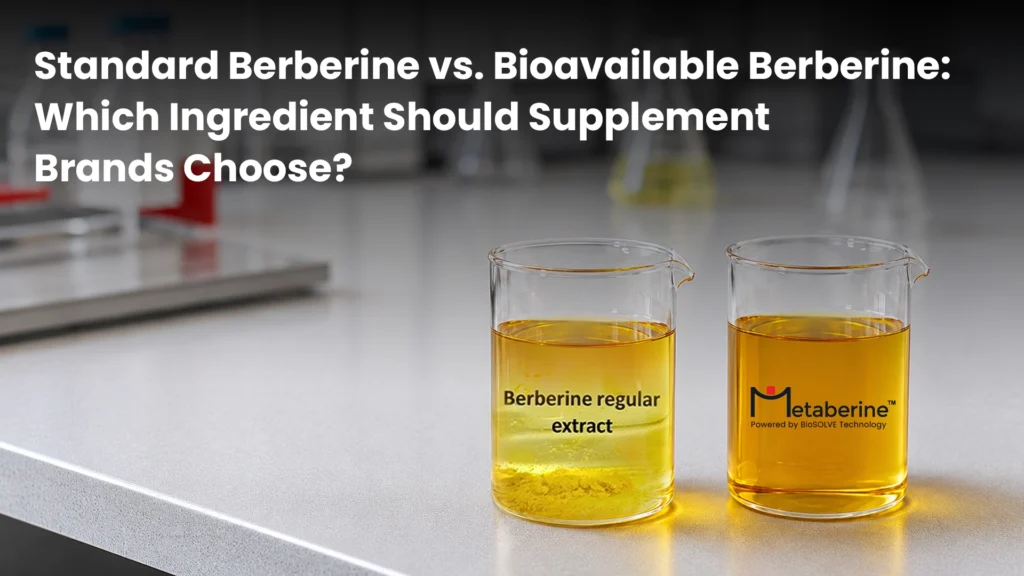
Standard Berberine vs. Bioavailable Berberine: Which Ingredient Should Supplement Brands Choose?

What Is Standard Berberine? Standard berberine is an isoquinoline alkaloid extracted primarily from plants such as Berberis aristata, goldenseal, and barberry. It has a long history of use in traditional medicine systems and has become one of the most researched botanical compounds for metabolic health ingredient applications, with studies examining its role in glucose metabolism, lipid balance, and cardiovascular support. For supplement brands, standard, non-enhanced berberine extract is typically standardized to a percentage of berberine hydrochloride (often 97%+) and sold as a bulk berberine powder or capsule-ready raw material. It is widely available, relatively inexpensive per kilogram, and has decades of traditional and clinical usage behind it, which is exactly why so many berberine ingredient supplier catalogs still list it as a baseline offering. But raw purity is not the same as delivered efficacy, and that distinction is where standard berberine runs into trouble. The Bioavailability Challenge Berberine’s central limitation is not its biological activity, it’s getting enough of it into the bloodstream. A frequently cited pharmacokinetic review of berberine reports oral bioavailability below 1%, driven by poor aqueous solubility, P-glycoprotein-mediated efflux in the intestine, and extensive first-pass hepatic metabolism. In practical formulation terms, this means: Clinically studied doses of standard berberine often range from 900mg to 1,500mg per day, split into multiple servings High-dose berberine is associated with a higher incidence of gastrointestinal discomfort, including cramping and diarrhea Batch-to-batch variability in raw extract quality can translate into inconsistent absorption Large per-serving dosing increases capsule size, capsule count, or powder volume, all of which hurt consumer compliance For a category as competitive as weight management ingredient and blood sugar management ingredient formulations, these friction points directly affect product reviews, repeat purchase rates, and brand credibility. Why Bioavailability Matters Bioavailability isn’t a technical footnote, it’s the variable that determines whether a berberine formulation actually works at the dose on the label. Two products can list an identical milligram amount of berberine and produce meaningfully different physiological effects if one uses standard extract and the other uses an enhanced-delivery form. For brands, this has direct commercial implications: Substantiation: Bioavailability data supports stronger, more defensible label claims Dosing efficiency: Higher bioavailability allows lower per-serving doses, reducing cost-in-use and improving format flexibility (capsules, gummies, powders) Consumer experience: Lower doses generally mean fewer gastric side effects and better compliance Differentiation: In a crowded berberine category, a documented bioavailability advantage is one of the few genuinely defensible points of difference Standard Berberine vs. Metaberine® Comparison Factor Standard Berberine Metaberine® Oral bioavailability Less than 1% (native compound) 9× greater bioavailability Peak plasma concentration Baseline 37× higher plasma concentration Absorption speed Slow, variable 8× faster absorption Typical effective daily dose 900mg–1,500mg+ 200mg Delivery technology Standardized dry extract BioSOLVE™ aqueous, plant-based delivery Gastric tolerability Higher risk at high doses Improved at lower effective dose Label claim strength Limited by absorption data Supported by pharmacokinetic differentiation What Supplement Manufacturers Should Consider When evaluating a berberine extract manufacturer or ingredient supplier, brands should look beyond percentage purity alone and ask a more complete set of questions: What pharmacokinetic or bioavailability data supports this ingredient’s absorption claims? What is the clinically effective dose, and how does that compare to competitor formulations? Is the delivery technology proprietary, patentable, or otherwise defensible for marketing purposes? Does the supplier provide technical documentation suitable for regulatory and label substantiation? Can the ingredient support GLP-1-adjacent, insulin sensitivity, or PCOS-related product positioning with credible science? For brands building next-generation formulations in the GLP-1 support ingredient and metabolic health space, the choice increasingly comes down to standard, high-dose berberine versus a bioavailable alternative engineered for real-world performance. Metaberine® was developed specifically to close that gap, offering supplement manufacturers a standardized berberine extract alternative with pharmacokinetic data to back it up. Explore our full breakdown of GLP-1 and Metaberine®, or reach out to our team for technical data sheets and formulation support.

Bioavailable Berberine and GLP-1 metabolic support ingredient_Zeushygia
Blog, Uncategorized

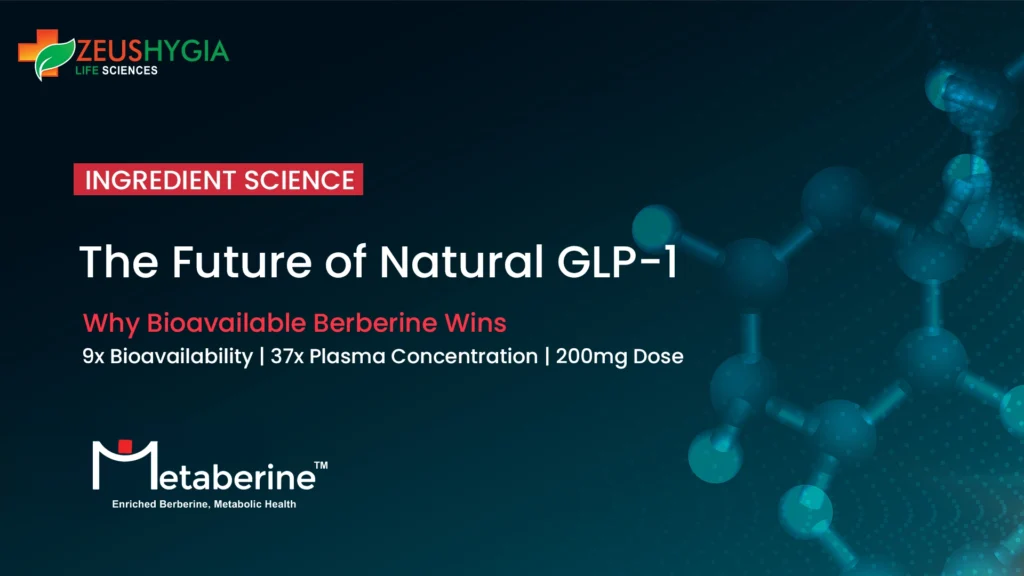
The Future of Natural GLP-1: Why Bioavailable Berberine Is Becoming the Ingredient of Choice

Why GLP-1 Is Reshaping the Supplement Industry\nGLP-1 has become one of the most talked-about mechanisms in metabolic health, and that conversation has moved well beyond pharmaceuticals. Supplement brands, formulators, and ingredient buyers are now actively searching for a natural GLP-1 ingredient that can support appetite regulation, glucose metabolism, and sustainable weight management without a prescription.\n\nThis shift is creating strong demand for GLP-1 support ingredients that work through the body’s own metabolic pathways. Consumers who are curious about GLP-1 biology but not ready for (or not candidates for) pharmaceutical intervention are actively seeking natural alternatives to GLP-1 medications, and brands are racing to formulate around this demand with credible, science-backed ingredients.\n\nFor ingredient suppliers and manufacturers, this represents a significant opportunity: the brands that win in this category will be the ones that can back their formulations with real bioavailability data, not just marketing claims.\n The Role of Berberine in Metabolic Health\nBerberine has one of the deepest research bases of any botanical compound used in metabolic health ingredient formulations. It has been studied for its effects on glucose metabolism, insulin sensitivity, and lipid balance, and is increasingly positioned alongside GLP-1 pathway science as a nutraceutical option for blood sugar support.\n\nMechanistically, berberine activates AMPK (AMP-activated protein kinase), a cellular energy sensor that plays a central role in glucose uptake and fat metabolism. This dual mechanism for metabolic flexibility is part of why berberine is frequently discussed as a GLP-1 nutraceutical option: its downstream metabolic effects overlap meaningfully with the appetite and glucose-regulating benefits associated with GLP-1 activity, without requiring injectable delivery.\n\nFor formulators building GLP-1 supplement ingredient stacks, berberine’s multi-pathway activity makes it a natural anchor ingredient, provided the bioavailability challenge is solved.\n Why Standard Berberine Falls Short\nDespite the research interest, standard berberine has a well-documented limitation: poor oral bioavailability. Studies on berberine pharmacokinetics report absorption rates below 1%, largely due to poor solubility, efflux by intestinal transporters, and rapid first-pass metabolism. A widely cited review of berberine bioavailability and pharmacokinetics outlines these absorption barriers in detail.\n\nIn practice, this means standard berberine formulations often require multi-gram daily doses split across several servings to achieve a clinically meaningful effect, which creates real problems for supplement brands:\n \n \t Large capsule counts hurt compliance and consumer experience\n \t High doses increase the likelihood of gastric discomfort\n \t Inconsistent absorption makes label claims harder to substantiate\n \t Higher raw material usage per serving increases formulation cost\n\nFor a berberine ingredient supplier or brand trying to build a credible clean-label weight loss product, these limitations are disqualifying in a market that increasingly expects clinical substantiation.\n How Bioavailable Berberine Improves Performance\nThis is where bioavailable berberine technology changes the equation. Enhanced-delivery berberine extracts are engineered specifically to overcome the solubility and absorption barriers of the native compound, using techniques such as aqueous plant-based encapsulation, particle size reduction, or co-formulation with absorption enhancers.\n\nThe result is a berberine ingredient that can deliver a clinically relevant dose at a fraction of the milligram weight, translating into:\n \n \t Higher plasma concentrations of active berberine\n \t Faster onset of metabolic activity\n \t Lower effective daily dose, improving compliance\n \t Reduced gastric side effects associated with high-dose standard berberine\n\nFor brands formulating around insulin sensitivity ingredient or weight management ingredient claims, this bioavailability advantage is often the difference between a product that performs in the real world and one that only performs on paper.\n Why Metaberine™ Is Designed for Modern GLP-1 Formulations\nMetaberine™ was developed by Zeus Hygia specifically to solve the bioavailability problem that has limited standard berberine for decades. Using our proprietary BioSOLVE™ technology, a clean-label, aqueous, plant-based delivery system, Metaberine™ achieves substantially higher plasma concentrations of berberine at a fraction of the conventional dose.\n\nKey differentiators for formulators evaluating a Metaberine™ bioavailable berberine ingredient include:\n \n \t 37× higher plasma concentration compared to standard berberine\n \t 9× greater bioavailability for improved glucose metabolism support\n \t 8× faster absorption, supporting quicker metabolic action\n \t Effective at just 200 mg\/day, versus multi-gram doses of standard berberine\n \t Natural support for GLP-1 pathway activity, AMPK activation, and mitochondrial health\n\n\nFor sustainable weight management and longevity-focused formulations, Metaberine™ supports metabolic resilience and improved energy efficiency at the cellular level.\n\nAs the natural GLP-1 category matures, ingredient suppliers who can offer both scientific credibility and formulation practicality will define the next generation of metabolic health products. Metaberine™ is built for exactly that role, giving supplement brands a Metaberine™ GLP-1 ingredient story backed by real pharmacokinetic data rather than category hype.\n\nWant to optimize your own recovery and endurance? Explore athletic hydration strategies paired with metabolic support for peak performance.\n\nReady to formulate with bioavailable berberine? Contact Zeus Hygia to request technical documentation and samples for Metaberine™, or explore our full ingredients portfolio.

Scroll to Top