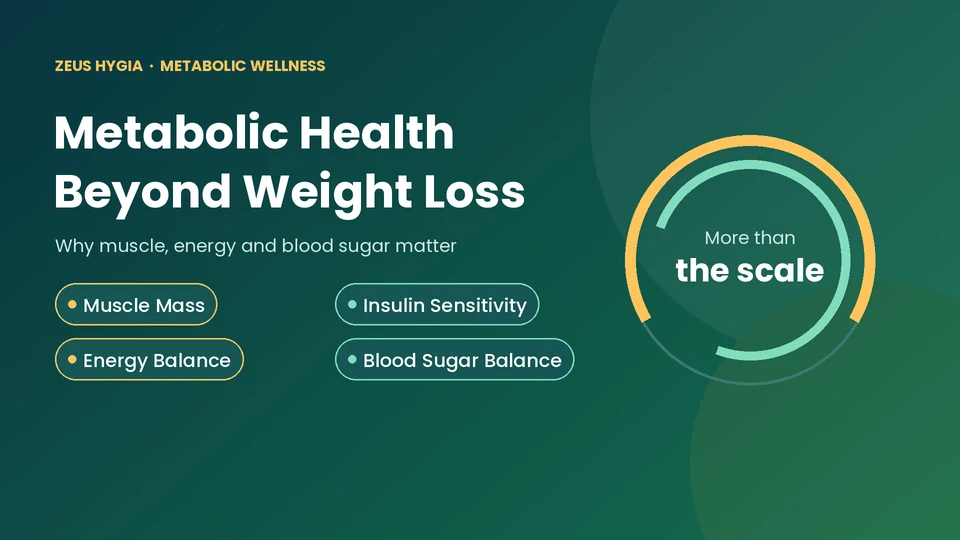
For many people, health goals begin with a number: body weight. But what if the weighing scale doesn’t tell the whole story?
Metabolic health goes beyond weight loss. It involves how effectively your body produces and uses energy, regulates blood glucose, responds to insulin, and maintains essential functions.
Two people with similar body weights can have very different metabolic health profiles. Factors such as muscle mass, physical activity, nutrition, sleep, and insulin sensitivity all contribute to how the body functions.
As awareness of metabolic wellness grows, the conversation is shifting from simply losing weight to understanding what is happening inside the body. Let’s explore five important factors that influence metabolic health and why they deserve more attention.
1. Muscle Mass: An Important Part of Metabolic Health
Muscles do much more than help us move, lift, and exercise. They also play an important role in glucose metabolism.
After a meal, glucose enters the bloodstream. Muscle tissue is one of the major places where glucose can be taken up and used for energy or stored for later use. Maintaining healthy muscle mass can therefore support normal glucose regulation and overall metabolic function.
Why muscle health matters
- Supports glucose uptake and utilization.
- Helps maintain physical strength and mobility.
- Contributes to daily energy expenditure.
- Supports healthy ageing and functional independence.
Resistance exercises, bodyweight workouts, walking, and adequate protein intake can help support muscle health. The goal is not necessarily to build large muscles. It is to maintain functional muscle strength as part of a healthy lifestyle.
2. Insulin Sensitivity: How Effectively Your Body Uses Insulin
Insulin is a hormone produced by the pancreas. Its primary role is to help glucose move from the bloodstream into cells, where it can be used or stored.
Insulin sensitivity describes how effectively the body’s cells respond to insulin. When insulin sensitivity is reduced, the body may need to produce more insulin to help manage blood glucose levels. This is commonly referred to as insulin resistance.
Several lifestyle factors can influence insulin sensitivity, including:
- Low levels of physical activity.
- Poor sleep quality.
- Excess calorie intake over time.
- Diets low in fibre and high in highly processed foods.
- Increased abdominal fat.
Supporting insulin sensitivity involves consistent lifestyle habits rather than relying on a single food, supplement, or quick solution. We look at how insulin resistance affects energy, cravings and abdominal weight in more detail in Bioavailable Berberine for Metabolic Health: Understanding AMPK, GLP-1 & Blood Sugar Support.
3. Energy Balance: Understanding Why You Feel Tired
Feeling tired occasionally is normal. However, persistent fatigue can have several possible causes, including inadequate sleep, nutritional deficiencies, stress, insufficient physical activity, or certain health conditions.
Metabolic processes help convert carbohydrates, fats, and proteins into energy that the body can use. When discussing metabolic health, it is important to understand how the body manages these energy sources.
A balanced approach to daily energy management includes:
- Eating a varied diet with adequate nutrients.
- Including protein and fibre-rich foods.
- Staying physically active.
- Maintaining consistent sleep routines.
- Drinking enough water.
If fatigue is persistent or unexplained, it is worth discussing it with a healthcare professional rather than assuming it is caused by a slow metabolism.
4. Blood Sugar Balance: Why Daily Habits Matter
Blood glucose naturally rises and falls throughout the day, particularly before and after meals. The body’s ability to regulate these changes is an important part of metabolic health.
Meal composition, portion sizes, physical activity, sleep, and individual health conditions can all influence blood glucose responses. Some practical habits that support healthy blood sugar balance include:
- Choose fibre-rich foods: Vegetables, legumes, whole grains, nuts, and seeds provide dietary fibre and support digestive health.
- Include protein in meals: Protein-rich foods can help make meals more satisfying and support muscle maintenance.
- Stay active after meals: A gentle walk after eating can help support glucose utilization.
- Limit highly processed foods: Be mindful of frequent consumption of foods and beverages high in added sugars.
- Prioritize sleep: Consistent, sufficient sleep is an important part of overall metabolic health.
People with diabetes or other glucose-regulation concerns should follow individualized medical advice and monitor their blood glucose as recommended.
5. The Role of Nutrition and Berberine Research in Metabolic Health
Nutrition is one of the foundations of metabolic wellness. Alongside a balanced diet and regular physical activity, researchers are exploring how certain plant-derived compounds may interact with metabolic pathways.
One such compound is berberine, a naturally occurring alkaloid found in several plants.
Berberine has attracted scientific interest because researchers are studying its interaction with pathways involved in cellular energy regulation, including AMP-activated protein kinase (AMPK). AMPK is often described as an energy sensor within cells. It helps regulate several processes related to energy production and utilization. Read more about how berberine interacts with AMPK and GLP-1.
However, research findings should be interpreted carefully. Studies investigating berberine do not mean that every berberine product produces the same effects, and evidence from laboratory or early-stage studies does not automatically establish clinical benefits in humans.
Why Berberine Bioavailability Matters
Bioavailability refers to the proportion of a substance that becomes available in the body after administration. It is an important consideration when evaluating nutritional ingredients because the amount consumed does not necessarily represent the amount that reaches the circulation.
Berberine formulation and delivery technologies are areas of ongoing research. Scientists are investigating whether different formulations can influence how berberine is absorbed and becomes available in the body. This is where ingredient quality, formulation, and human bioavailability data become important considerations. For a side-by-side look, see Standard Berberine vs. Bioavailable Berberine.
Introducing Metaberine™ by Zeus Hygia
Metaberine™ by Zeus Hygia is developed around a bioavailability-focused approach to berberine formulation.
Its human bioavailability research has examined how the formulation compares with conventional berberine extract under a controlled, single-dose study design. Such research can help inform discussions about ingredient absorption and formulation performance. However, a bioavailability study alone does not establish long-term clinical outcomes, weight-loss effectiveness, or the ability to treat or prevent a disease.
For brands, formulators, and consumers exploring berberine ingredients, understanding both the formulation and the available scientific evidence is an important part of making informed decisions. Brands evaluating sources can also review our checklist of features to look for in a berberine ingredient supplier.
Learn more about Metaberine™ by Zeus Hygia.
6. Five Everyday Habits to Support Better Metabolic Health
Improving metabolic wellness does not require extreme routines. Consistency with basic habits can make a meaningful contribution to overall health.
| Daily habit | Why it matters |
|---|---|
| Regular physical activity | Supports muscle function and glucose utilization |
| Balanced meals | Provides essential nutrients and supports energy needs |
| Adequate sleep | Helps regulate processes involved in appetite and metabolism |
| Stress management | Supports overall physical and mental well-being |
| Routine health check-ups | Helps identify potential metabolic concerns |
A sustainable routine is more valuable than following short-term trends or expecting instant results.
Related Reading
- Bioavailable Berberine for Metabolic Health: AMPK, GLP-1 & Blood Sugar Support
- Standard Berberine vs. Bioavailable Berberine: Which Ingredient Should Supplement Brands Choose?
- The Future of Natural GLP-1: Why Bioavailable Berberine Is Becoming the Ingredient of Choice
- GLP-1 and Weight Management
Frequently Asked Questions
What is metabolic health?
Metabolic health refers to how effectively the body manages processes such as blood glucose regulation, energy production, insulin response, and the utilization of nutrients.
Is metabolic health only related to body weight?
No. Body weight is only one measure. Muscle mass, blood glucose, blood pressure, blood lipids, physical activity, and insulin sensitivity are also relevant to understanding metabolic health.
How does muscle mass influence metabolism?
Muscle tissue plays an important role in glucose uptake and energy utilization. Maintaining muscle through resistance exercise and adequate nutrition can support metabolic function.
What is insulin sensitivity?
Insulin sensitivity describes how effectively the body’s cells respond to insulin. Reduced insulin sensitivity can mean the body needs more insulin to manage blood glucose.
What is berberine, and why is it being researched?
Berberine is a plant-derived alkaloid being studied for its interactions with several biological pathways, including pathways involved in cellular energy regulation and glucose metabolism. Research is ongoing, and its effects should not be assumed to be the same across all formulations.
Why is berberine bioavailability important?
Bioavailability helps describe how much of an ingredient becomes available in the body after consumption. It is an important factor when evaluating ingredient formulations and interpreting research findings.
Can supplements replace a healthy lifestyle?
No. Supplements should not replace balanced nutrition, physical activity, adequate sleep, or appropriate medical care. Anyone considering a supplement, particularly those taking medication or managing a health condition, should consult a qualified healthcare professional.
Conclusion: Focus on How Your Body Functions, Not Just How Much You Weigh
Metabolic health is a bigger picture. It includes muscle strength, insulin sensitivity, blood glucose regulation, energy balance, nutrition, and daily lifestyle habits.
Instead of focusing exclusively on weight loss, a more sustainable approach is to understand and support the processes that help the body function effectively.
Scientific research into ingredients such as berberine and formulation technologies such as Metaberine™ is adding to the discussion around metabolic wellness. As research develops, evidence-based information and responsible product choices remain essential.
Because better health is not just about what you weigh. It is also about how well your body works.
Work With Zeus Hygia
Developing a metabolic health or blood sugar support formulation? Contact Zeus Hygia for Metaberine™ technical documentation, bioavailability data, and samples.
These statements have not been evaluated by the FDA. This product is not intended to diagnose, treat, cure, or prevent any disease.